Chapter 2
Peptide Fundamentals
2.1 What Are Peptides?
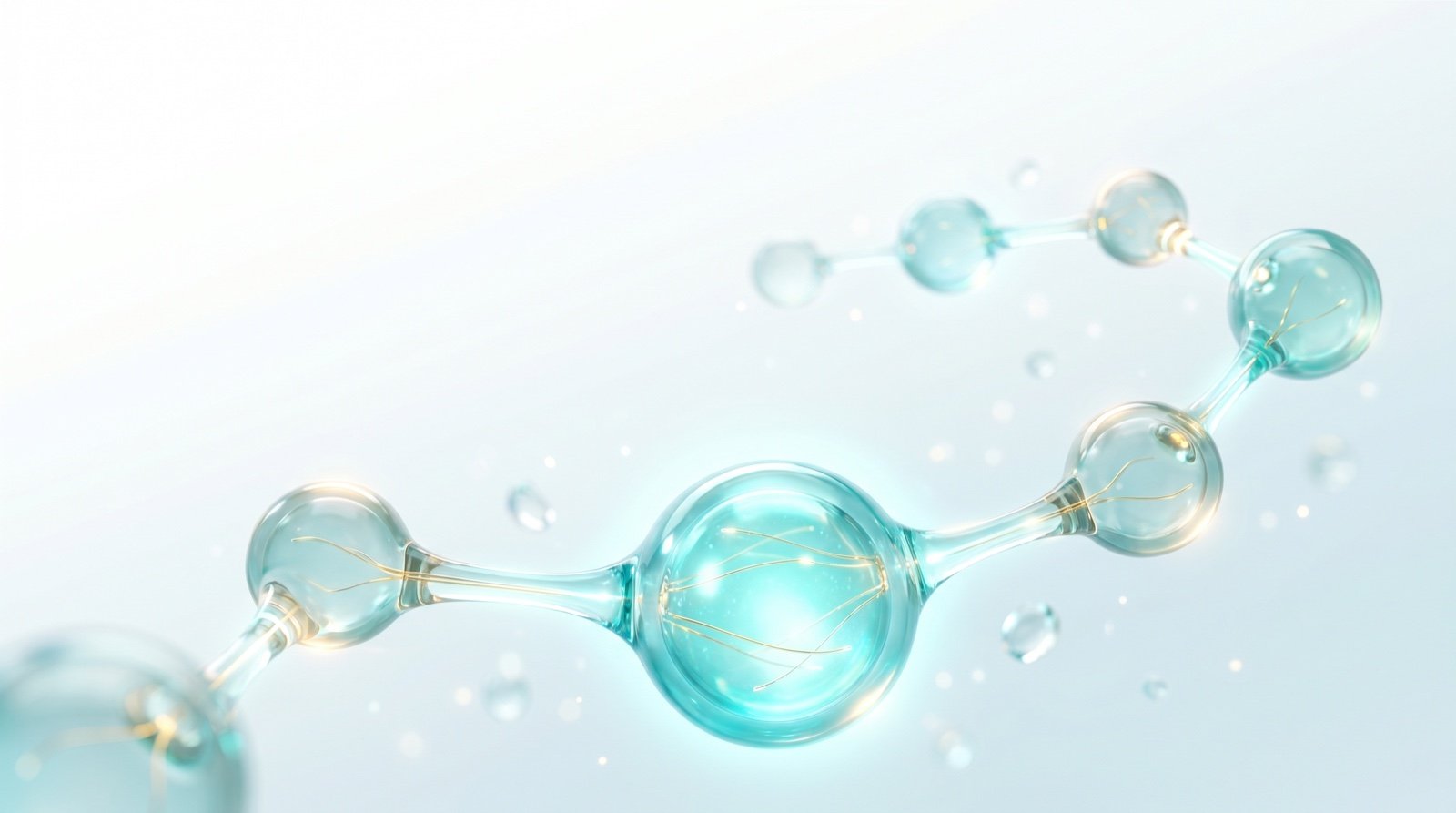
Peptides are short chains of amino acids — typically between 2 to 50 — that are linked together by peptide bonds. Amino acids are the fundamental building blocks of life, forming the proteins that structure and regulate virtually every system in your body.
While proteins are large and complex, peptides are simpler — and highly biologically active. They act as messengers, signalers, and switches, directing cells to perform specific functions like healing, burning fat, building new tissue, balancing hormones, or regulating the immune system.
Therapeutic peptides are either:
- Natural: Identical to those produced inside your body
- Synthetic: Designed to mimic or enhance natural peptides, sometimes modified for greater stability, absorption, or effectiveness
2.2 Why Peptides Are a Powerful Health Optimization Tool
Unlike most pharmaceuticals, which often force unnatural changes or cause systemic side effects, peptides work with your biology. They stimulate or enhance natural processes, not override them.
Peptides offer:
- Greater precision — targeting specific pathways rather than systemic effects
- Fewer systemic side effects — working with your body's existing systems
- Support for regeneration and repair — accelerating natural healing
- Enhancement of metabolic efficiency — optimizing energy use
- Improved recovery, sleep, cognition, and resilience
Because they act on your body's own signaling pathways, they often support holistic, wide-ranging improvements without the drawbacks associated with synthetic drugs.
2.3 Key Benefits vs. Potential Risks
Benefits:
- Accelerated healing and recovery
- Enhanced fat burning and body recomposition
- Improved sleep, cognition, and energy
- Strengthened immune system resilience
- Slowed biological aging and improved skin health
Potential Risks:
- Mild injection site irritation
- Possible bloating or water retention (especially with growth hormone secretagogues)
- Rare headaches, nausea, or dizziness
- Hormonal imbalance if misused
- Risks from contaminated, low-quality products
Risk is minimized through intelligent use and sourcing high-quality compounds from trusted suppliers.
2.4 Common Myths About Peptides
Myth 1: Peptides are steroids.
→ False. Peptides stimulate natural processes, while steroids flood the body with exogenous hormones. They work through completely different mechanisms.
Myth 2: Peptides are illegal.
→ False. Many peptides are legal for personal use or research but may not be FDA-approved for specific medical claims.
Myth 3: Peptides work overnight.
→ False. While some benefits appear quickly (better sleep, faster healing), deeper changes (fat loss, anti-aging) require time and consistency.
Myth 4: More is better.
→ False. Overdosing or stacking unnecessarily increases risk. Smart, strategic use yields better results.
Myth 5: Only athletes use peptides.
→ False. Peptides benefit anyone pursuing optimal health, recovery, immunity, and longevity.
Scientific references
- Fosgerau K, Hoffmann T. Peptide therapeutics: current status and future directions. Drug Discovery Today. 2015;20(1):122-128. doi:10.1016/j.drudis.2014.10.003 · PMID 25450771
- Lau JL, Dunn MK. Therapeutic peptides: historical perspectives, current development trends, and future directions. Bioorganic & Medicinal Chemistry. 2018;26(10):2700-2707. doi:10.1016/j.bmc.2017.06.052 · PMID 28720325
- Henninot A, Collins JC, Nuss JM. The current state of peptide drug discovery: back to the future? Journal of Medicinal Chemistry. 2018;61(4):1382-1414. doi:10.1021/acs.jmedchem.7b00318 · PMID 28737935